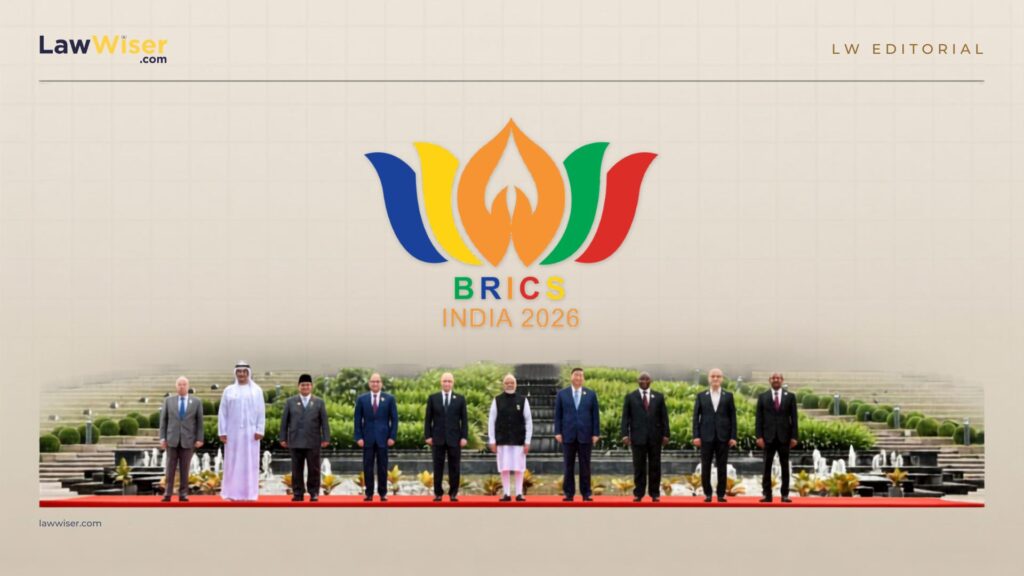
The 18th BRICS Summit in New Delhi has ended on 13 September, with the signing of the New Delhi Declaration and the completion of India’s Chairship of the BRICS group for 2026. The Declaration is dense: global governance reform, trade, resilient value chains, technology, finance, energy and judicial cooperation, covering India’s chairship which has reportedly achieved more than 50 outcomes throughout the year. However, it’s not about density. The actual question this Declaration asks for an eleven-member group without a treaty and without a secretariat, is how do broad political commitments actually get to the businesses expected to act on them?
Some of the most impactful advancements for businesses are in the economic and financial sphere. BRICS member countries have agreed to further discussion of increasing the use of local currencies in trade and investment and the ongoing efforts to achieve interoperability of payment and messaging systems. Both are not new, both have been discussed in previous summits, but the more they are added the closer they come to a policy position and better implementation. If these initiatives develop from the discussion phase, they have the potential to influence the way businesses in BRICS jurisdictions conduct cross-border payments, manage currency risk, and manage price risk.
The Declaration also places more focus on global value chains, which includes resilient and predictable value chains, as well as trade facilitation, connectivity, access to technology, and IP rights. The main item on the agenda is a proposed BRICS Global Value Chains Action Plan for 2026-2030, which could provide a more formal framework for economic cooperation.
It’s easy to overlook but perhaps the most important line in the Declaration for lawyers: BRICS members emphasized the importance of effective dispute-resolution procedures to ensure legal certainty and investor confidence, and expressed their wish to strengthen cooperation in mediation and arbitration in cross-border commercial disputes. Eleven jurisdictions with different arbitration statutes, different rules on interim relief and enforcement, and no common regional instrument like the EU framework are being called on to harmonize their dispute-resolution cooperation. The detail that will be most closely watched is whether it will be a BRICS-backed institution, model arbitration clauses, or mutual enforcement arrangements. And the Declaration itself says the least about any of these.
All the BRICS Declarations are well written. The test is how fast (or slow) local-currency settlement rules, payment-system approvals, value-chain frameworks and dispute-resolution cooperation get translated from mere words to instruments that business can use. Volume was the highlight of India’s chairship year. India’s success in chairing will be judged not by the number of commitments, but by the number of lasting, usable mechanisms that are established.
The following developments will be important for businesses and counsel: Whether local-currency and payment-interoperability commitments turn into actual settlement infrastructure, the scope and timeline of the BRICS Global Value Chains Action Plan 2026-2030 after it is drafted, progress on the cooperation in arbitration and mediation through institutions, and, most importantly, how individual BRICS states turn the commitments in the Declaration into domestic implementation, as the Declaration itself does not create binding obligations for the parties.